INTERVIEW | Alice Licata
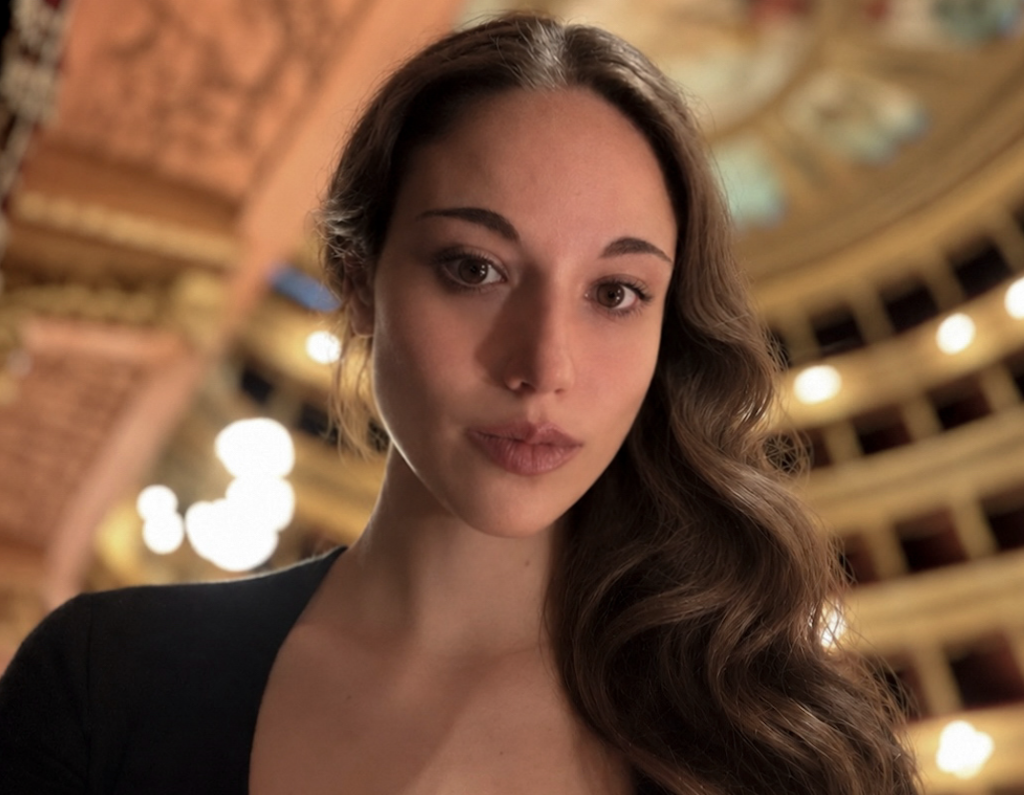
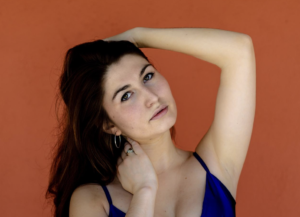
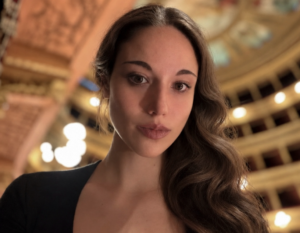
A few months ago, I sent an email to the Teatro Massimo in Palermo to introduce myself, explain who I am, and ask if I might discreetly record some video footage of the performance to share on our social media channels. This sparked a truly warm, friendly relationship with the theater—and with Alice, who was incredibly kind. She has a fascinating job—one that deserves to be highlighted even more.
1. To begin with, could you introduce yourself? Who are you, what do you do, and how long has opera been part of your everyday life?
My name is Alice Licata, and I am responsible for digital communications at the Teatro Massimo in Palermo. I started when I was 23, and I am very grateful to the theatre’s General Director, Maestro Marco Betta, for the trust he placed in me and for giving me such an important responsibility, even though I still had – and still have – a great deal to learn. Opportunities like this are not something you can take for granted at the very beginning of your professional career, and from the outset I have tried to live up to that trust.
My relationship with music, however, began long before that. I studied piano and singing, two disciplines that taught me to listen in different ways and have probably influenced the way I work, too.
Today, what interests me most is bringing my generation closer to opera and symphonic music. We constantly hear about the need to make classical music more modern and accessible, but I am not sure that music itself is the problem. Mozart, Puccini and Mahler do not need our help to be interesting. Perhaps we are the ones who need to learn how to tell their stories better.
2. Do you remember the first time you went to the opera? What was the production like, and how did it make you feel?
No, and I am sorry about that, because it would be lovely to have a particularly romantic story to tell! But honestly, I cannot remember which opera it was.
Nor do I believe that a passion necessarily has to begin with one specific moment. Sometimes it is something that develops gradually, almost without us realising it.
What has changed considerably in my case is the way I listen. I find myself paying more and more attention to the orchestra, not just the voices. I am interested in what the music tells us, independently of what we see on stage.
And I find it fascinating how much our perception of the same opera can change over the years. We can know a work inside out and still keep discovering new things in it. I think that is one of the reasons why we never tire of the great composers.
3. As a social media manager, do you think artists’ popularity is also driven by Instagram and TikTok?
Yes, absolutely! But I would not confuse popularity with artistic quality. Social media can make someone very well-known, which is wonderful, but that does not necessarily tell us anything about their musical abilities.
That said, I also disagree with a certain attitude of superiority towards digital communication. I do not see why we should give up a tool that allows us to reach people who might otherwise never come into contact with classical music.
I simplify things all the time. I use humour, trends and the language of my generation. And I am not ashamed of that at all. However, we need to distinguish between simplifying the way we communicate something and simplifying the thing we are communicating.
I would never ask a symphony to become less complex in order to work on TikTok. I would much rather ask myself how I can persuade someone to listen to it.
People often say that young people can no longer concentrate. I am not entirely convinced. Perhaps we are simply not giving them enough reasons to do so.
4. What is the first opera you would recommend someone to see?
Probably La bohème. I am very fan of Puccini and the Romantic repertoire, and I have a particular preference for operas in which the orchestra has something truly important to say.
Puccini is fascinating because his music can seem incredibly simple. It draws you in immediately, but when you start looking at how it is constructed, you realise just how sophisticated it is. Writing something that sounds so natural is incredibly difficult.
And then there is the fact that La bohème is about young people, friendship, having no money, and love affairs that seem destined to last forever. I do not think these themes have aged particularly badly!
Of course, I am not sure there is one perfect opera for everyone. It depends on the person you are talking to. But I think Puccini has a rare ability to move someone before they have even had time to ask themselves whether they like opera.
5. What do you think about people filming during opera performances?
Well, considering that filming is part of my job, I am probably the last person who should complain about it!
But I must admit that sometimes I really wish I did not have to do it. There are moments when the orchestra is playing something truly wonderful and, instead of listening, I have to worry about whether my phone is straight, whether the framing works and whether there is enough light. It is not exactly the ideal way to enjoy a concert.
I think there is something very special about listening to live music knowing that the moment will never come back. It will never be exactly the same, not even the following evening.
Of course, I strongly believe in digital communication. But if the result of my work were to persuade someone to buy a ticket, only for them to spend the entire performance looking at their phone, I would have to question how effective my work really was.
So please, don’t film – enjoy the performance! At least those of you who have the luxury of doing so!
6. If you could relive one evening at the opera, which one would you choose?
Eugene Onegin at the Vienna State Opera in 2021, with Asmik Grigorian as Tatiana.
I love Tchaikovsky, and I find myself relating quite a lot to Tatiana. I often feel that the character is portrayed in an overly sentimental way. Of course, she is romantic, but I do not think that is what makes her interesting.
At the beginning, she is a young woman who has the courage to declare her feelings, even at the risk of being rejected. By the end, she is a woman who has the courage to say no, despite still being in love. I am not sure which of the two takes more courage.
Musically, I find it extraordinary how Tchaikovsky manages to reveal his characters’ contradictions without necessarily resolving them. The music does not always tell us what we should think of them, and I find that particularly compelling.
Asmik Grigorian made a tremendous impression on me. I would love to hear that same interpretation again today. I am not sure I would have exactly the same reaction.
Perhaps that is precisely what I love about music: we can spend a lifetime listening to the same masterpieces without ever exhausting everything they have to tell us. And I like to think that my work, in its own small way, might persuade someone to embark on that journey.
About the Author